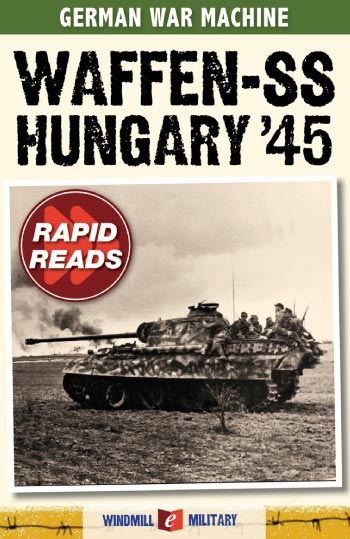
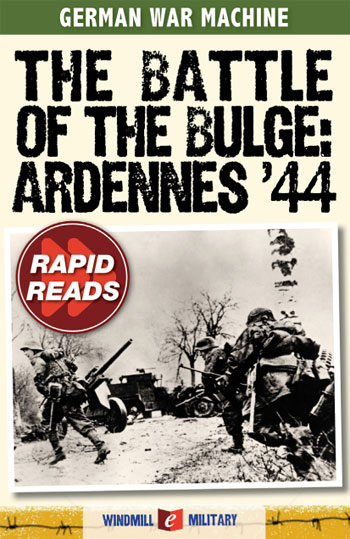
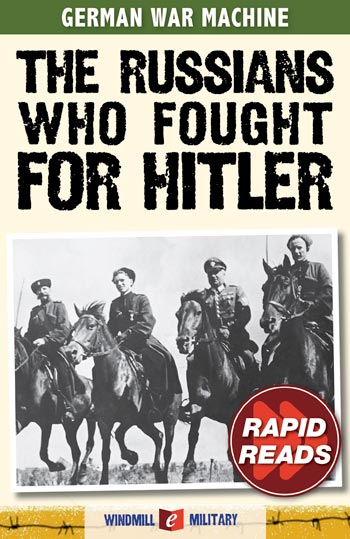
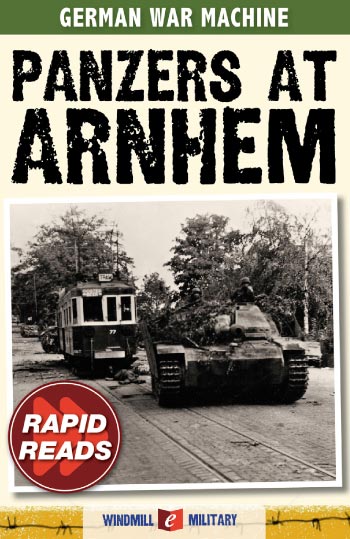
Welcome to the new German War Machine, a non-political website home to a wealth of free content on the German Armed Forces in World War II. With authoritative text supported by videos, photographs and maps, German War Machine provides insight and information on every aspect of Germany’s military forces – land, sea and air – between 1939 and 1945. It is also home to a unique series of handy Rapid Reads ebooks.
Constantly expanding, German War Machine is building into a comprehensive reference database on one of the most powerful military forces the world has ever seen.
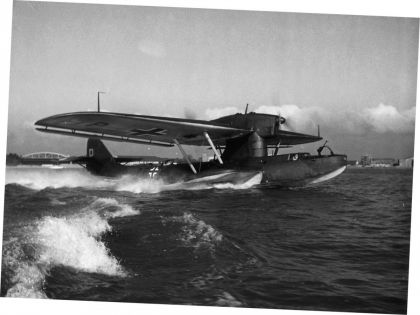
The Do 18 was originally produced as a trans-Atlantic mail carrier to supersede the Dornier Wal 33 (from 1934 Do 15) in service with Deutsche Lufthansa on its South Atlantic routes, and later used as a medium-range maritime reconnaissance type by the Luftwaffe. The first of four prototypes made its maiden flight in March 1935, one of them being used for an experimental crossing of the North Atlantic. The twin-Junkers Jumo 205 diesels were mounted in tandem above the wing centre section, itself carried on a semi-circular hull with characteristic Dornier under-surface and lateral sponsons, and strengthened for catapulting (most German warships were equipped with catapults for mounting aircraft – vital for long-range reconnaissance).
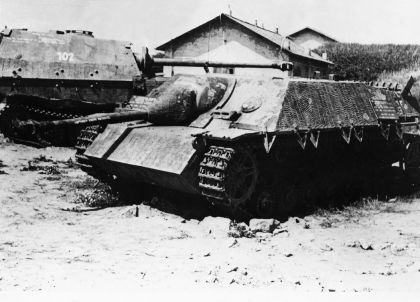
Introduced late in 1943, the Jagdpanzer IV was based on the PzKpfw IV medium tank with the turret removed and the upper hull revised into a fixed superstructure, including 60mm (2.47in) upper and lower frontal plates sloped at 45° and 57° respectively, above the all-welded original hull. The sloping sides of the superstructure extended beyond the vertical hull sides over the tracks to provide additional volume for ammunition stowage (a maximum of 79 rounds). Armour skirts of 5mm (0.2in) thickness were bolted to brackets welded to the vehicle’s sides.
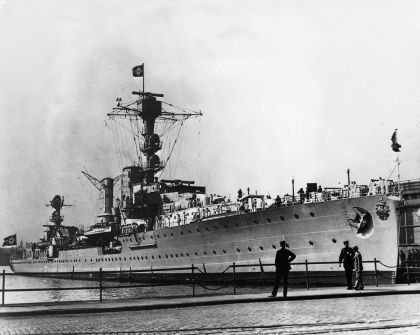
Completed in January 1925, the light cruiser Emden was the first medium-sized German warship built after World War I. Originally a coal-burning vessel, she was intended primarily for overseas service and consequently had a large bunker capacity; particular attention was paid to accommodation space and crew comfort, something of a novelty at that time. Her first mission in World War II was to lay mines in the North Sea, and, in April 1940, she was one of the warships that accompanied the Blücher during the invasion of Norway. Though this operation was a costly affair in terms in shipping, she survived and was later transferred to the Baltic and saw considerable operational service there, initially operating as part of a powerful task force that included the new battleship Tirpitz and later operating as a mine warfare training vessel.
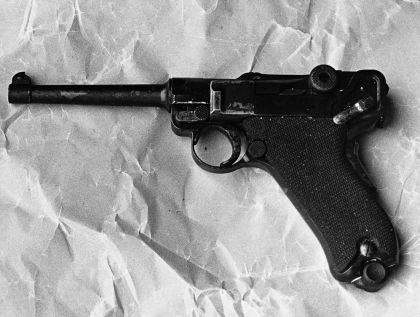
Generally known as the “Luger”, the Pistole 08 is amongst the most celebrated pistols ever placed in production. The first Luger pistols for military service were manufactured in 1900 to meet a Swiss order, and the type was also adopted by the German navy during 1904 and then by the German Army in 1908. It was this last order that led to the designation P 08, which became the most important of some 35 or more Luger pistol variants.
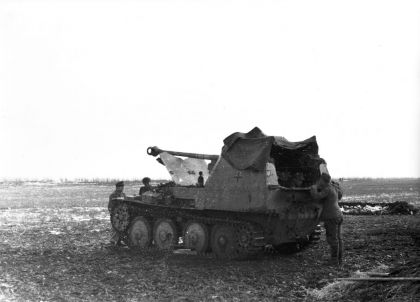
On orders from Hitler, in July 1942 production capacity of the Panzer 38(t) was switched to self-propelled gun chassis. This prompted a new design in which the engine was moved to the centre of the vehicle, which allowed the gun to be moved to the rear. In addition, frontal armour was reduced, which also lessened overall weight.
You must be logged in to submit a caption. Please login or signup if you don’t have an account yet.
Help required!
We have a large photo collection, many of which are uncaptioned, or for which we have incomplete information or are guessing. If any readers can give us correct captions (or more informed captions than we hold at the moment) we would be very grateful. We will display on the site the best or most accurate captions for the photos that we are putting up. Please make your captions no longer than 150 words - shorter if possible.
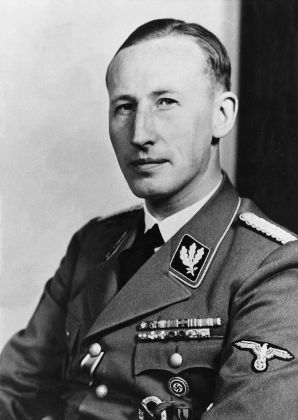
Reinhard Heydrich in his uniform as SS-Gruppenfuhrer. Heydrich was a key member of the Nazi regime, who was central in pre-war attacks on Jews, such as Kristallnacht of 1938; he organised the Einsatzgruppen that followed the army during Operation Barbarossa in 1941 and slaughtered hundreds of thousands of Russian Jews; and he chaired the Wannsee Conference of January 1942 that set in motion plans for the “Final Solution”, the murder of all Jews within Nazi-controlled Europe. Strangely, there were always rumours that Heydrich had Jewish ancestry, rumours he strove to quell.
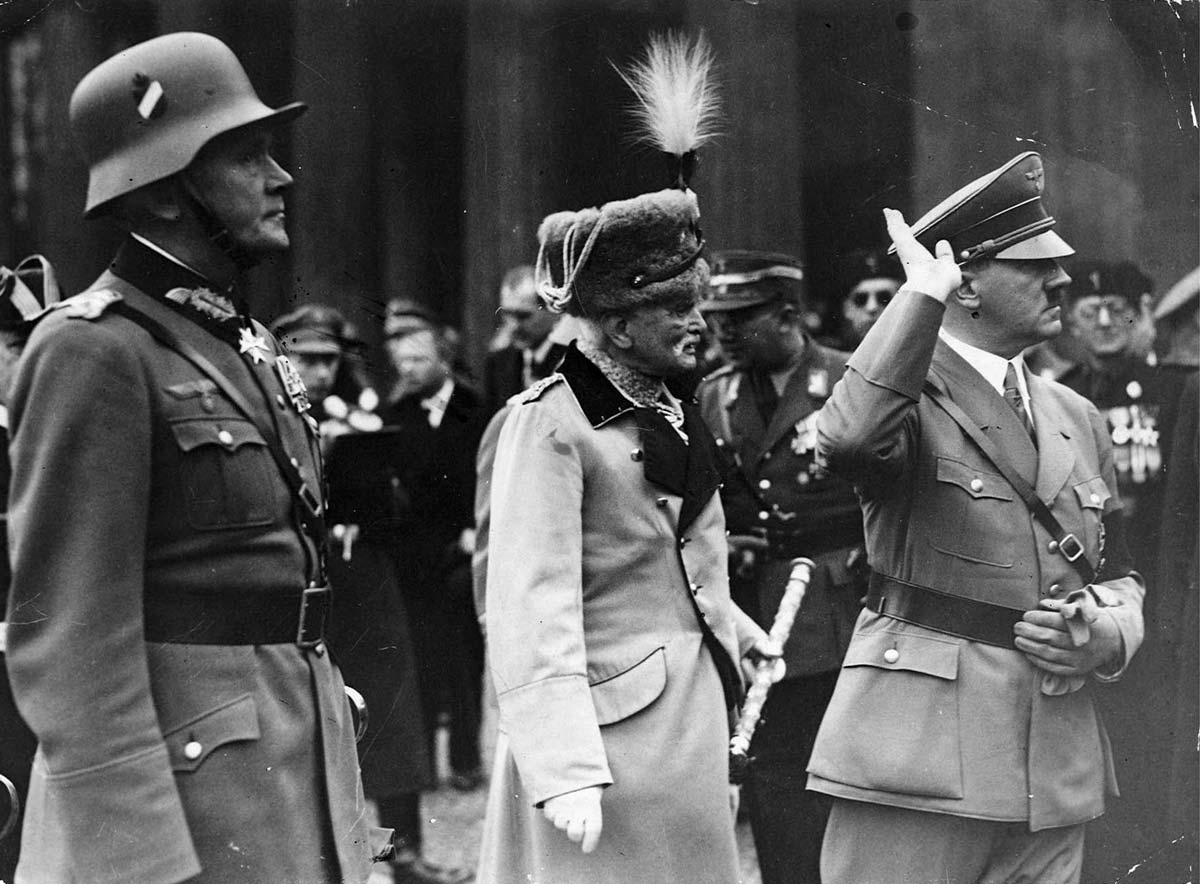
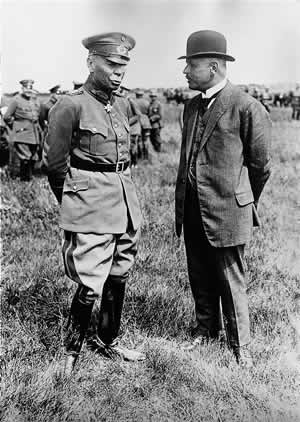
Infantry General Hans von Seeckt (left) was the commander in chief of the German Army from 1920 to 1926. As such he played a pivotal role in shaping the evolution of the interwar German military. Confronted with the reduction of German military capabilities imposed by the draconian Versailles settlement of 1919, Seeckt utilized his experience of mobile warfare on the Eastern Front during World War I to pursue his belief that an aggressive defense conducted by mobile forces could defeat a numerically and materially superior enemy. It was Seeckt, therefore, who initially pushed motorization in the interwar German Army as he sought to inculcate offensive spirit in German troops.